The following contains some different types of nursing, plus a description of each, including a general overview of the daily tasks involved.
General Nursing
These professionals typically have a strong foundational knowledge in basic nursing care. They can practice in many different types of healthcare settings, including hospitals, clinics, and nursing homes. Their daily tasks involve providing stabilization care, managing stress, administering medications, and provide emergency support as needed.
Nurse Educator
Nurse educators have received advanced and special education in order to not only become registered nurses, but teachers, as well. Some may choose to be full-time educators, while others only take this position in a part time role. Typically, these professionals work in teaching hospitals and nursing schools in a general or specialized area of study. Even if an individual chooses to become a full time educator, they still need to keep current with the latest nursing methods and newest technology.
Occupational Health Nurse
OHNs work with employers and companies to design and develop health and safety programs. Their job is to understand safety and prevention methods in relation to hazardous exposure and workers' illnesses and injuries. These individuals are also typically in charge of emergency preparedness, employee treatment and follow-up, and return-to-work issues.
Intensive/Critical Care Nursing
The role of these nurses is to care for the most unstable and critically ill patients, typically found in intensive care units and emergency departments. Intensive care nurses usually specialize in treating babies, children, or adults. On a day-to-day basis, these professionals will analyze patients in critical condition, give intensive therapy, and maintain life support systems. This career is typically fast-paced and involves a complex working environment.
Diabetes Nursing
These nurses work primarily with patients who have diabetes. Most of their time will be spent helping patients monitor their blood sugar and giving nutritional therapy. These nurses will also be well-versed in the proper diet, exercise, and lifestyle those with diabetes should lead. Some diabetes nurses choose to become diabetes educators, or diabetes nurse consultants.
Different Types of Nursing

Nursing Management for Social Isolation

 Social isolation is a state where an individual has decreased or even not at all able to interact with others around them. Patients may feel rejected, not accepted, lonely, and unable to foster meaningful relationships with others.
Social isolation is a lonely condition is expressed by the individual and perceived as being caused by others and as a negative situation that threatens. With characteristics: living alone in the room, inability to communicate, withdrawal, lack of eye contact. Discrepancies or immaturity interests and activities with the development or the age. Preoccupation with his own thoughts, repetition, no meaningful action. Expressing feelings of rejection or loneliness caused by others. Experience different feelings with others, feel uncomfortable with people.
Behavior on the client include:
- Less spontaneous.
- Apathetic (not / ignore environment).
- Moody facial expression.
- Do not want to take care of himself and not pay attention to personal hygiene.
- Reduction or absence of verbal communication.
- No or less conscious environment.
- Intake disturbed eating and drinking.
- Urinary retention and vases.
- Decreased activity.
- Lack of self-esteem.
Stress triggers, generally include stressful life events such as loss, which affects an individual's ability to relate to others and cause anxiety.
Stress triggers, can be grouped into two categories, among others:
1) sociocultural stressors
Stress is caused by social and cultural communities. Events or changes in the socio-cultural life sparked trouble for dealing with others and how to behave.
2) psychological stressors
Stress is caused due to prolonged anxiety and the individual does not have the ability to cope.
Coping Mechanisms
Defense mechanism that is often used on each social disorder are:
1) regression, the progress or retreat behavior.
2) projection, the weakness and lack of self-posed to others.
3) repression, which override impulse or painful memories.
4) isolation, which shy away from interaction with the outside environment.
Assessment
Assessment in patients with social isolation can be done through interviews and observations:
- The Patient tells feeling lonely or rejected by others.
- The patient does not feel safe being with other people.
- The patient said that does not mean the relationship with others.
- The Patient feel slow and tired of spending time.
- The patient is not able to concentrate and make decisions.
- The patient feel worthless.
- The patient not sure it can continue living.
Nursing Diagnosis and Interventions for Social Isolation
Social isolation: Withdrawn
General purpose: Clients can interact with other people.
Specific purpose:
1. Patients can develop a trusting relationship.
2. Patients can be aware of the causes of social isolation.
3. Patients can interact with other people.
Outcomes:
- Patients are able to communicate well with the nurses.
- Patients can mention the causes and signs of withdrawing.
- Patients are able to interact with caregivers, family, and other patients.
Interventions:
1. Fostering a trusting relationship:
- Say hello to the patient, each time interacting with patients.
- Acquainted with the patient: introduce full name and the name of the nurse call, and ask the patient's full name and nickname patients.
- Ask the patient's feelings and complaints at this time.
- Create a care contract: what nurses will do with the patient, how long it will be done and where the implementation of activities.
- Explain that the nurses will keep confidential the information obtained for the purposes of therapy.
- Show empathy to the patient at all times.
- Fulfill the basic needs of the patient if possible.
- Ask the patient habit, about the habits of interacting with others.
- Ask causes the patient does not want to interact with others.
4. Help patients recognize losses not related to the others, with:
- Discuss the disadvantages, if the patient just shut up and do not get along with others.
- Explain the effect of social isolation on the physical health of the patient.
Therapy
Therapeutic group activities: socialization
Therapeutic group activities: socialization is an effort to facilitate the client's ability to socialize with a number of social relationship problems.
Goals:
1. The client is able to introduce their own self-
2. The client is able to get acquainted with members of the group
3. The client is able to converse with members of the group
4. The client is able to convey and discuss the topic conversation
5. The client is able to convey and discuss personal problems to others
6. The client is able to work together in a group socialization game
7. The client is able to express an opinion on the benefits of the activities undertaken.
Setting:
1. Client and therapist, sitting together in a circle
2. The room was comfortable and quiet
Tools
1. Tape recorder
2. Cassette
3. Tennis ball
4. Notebook and pen
5. Schedule patient activity
Methods:
1. Group dynamics
2. Discussion and Q & A
3. Playing the role / simulation
Step activity
1. Preparation
a. Selecting the client as indicated
b. Make contracts with clients
c. Prepare equipment and meeting place
2. Orientation
At this stage the therapist do:
a. Give therapeutic greetings: greetings from therapists
b. Evaluation / validation: asking patients at this time
c. contract:
1) identifies the purpose of activities, which introduce self-own.
2) Explain the following rules
- If there are clients who will leave the group to ask for permission to the client
- Length of activity 45 minutes
- Each client follow up activities completed
3. stage of work
a. Describe the activity, ie cassette tape recorder is turned on and the ball will be circulated counter-clockwise (ie towards the left) and when the tape off the members of the group who held the ball introduce himself.
b. Turn on the tape recorder and tape the opposite tennis balls circulate clockwise.
c. When the tape off, members of the group that holds the ball can turn to mention: greetings, full name, nicknames, hobbies and origin started by therapists as an example.
d. Write nicknames on paper / board name and paste / use
e. Repeat the activity b, c, d until all members of the group gets a turn
f. Give credit to the success of each member of the group members applause.

Nursing Management of Rheumatoid Arthritis

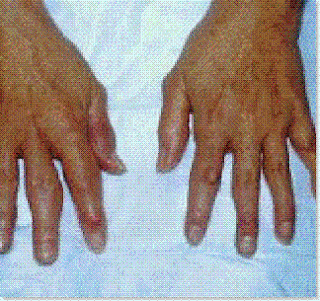
 Rheumatoid arthritis is an autoimmune disease that causes inflammation in your joints. In RA, for reasons no one fully understands, the immune system – which is designed to protect our health by attacking foreign cells such as viruses and bacteria – instead attacks the body’s own tissues, specifically the synovium, a thin membrane that lines the joints.
The cause of rheumatoid arthritis is not yet known. Most scientists agree that a combination of genetic and environmental factors is responsible. Researchers have identified genetic markers that cause a tenfold greater probability of developing rheumatoid arthritis.
Common symptoms of rheumatoid arthritis include:
- painful, swollen joints
- stiffness
- tiredness (fatigue), depression and irritability
- anaemia
- flu-like symptoms, such as feeling generally ill, feeling hot and sweating.
Less common symptoms include:
- weight loss
- eye inflammation
- rheumatoid nodules
- inflammation of other parts of your body.
Because the exact cause of Rheumatoid Arthritis is unknown, there is no causative treatment that can cure this disease. It should really be explained to the patient so that the treatment given out aimed at reducing complaints / symptoms of slowing progression of the disease.
The main objective of the program management / treatment is as follows:
- To relieve pain and inflammation.
- To maintain joint function and a maximum capacity of patients.
- To prevent and or correct deformity that occurs in the joints.
- Maintaining independence so as not to depend on others.
Management / Treatment of patients with Rheumatoid Arthritis, as follows:
1. Education
Adequate education about the disease to patients, their families and anyone connected with patients. Education will include understanding the pathophysiology (disease progression), the cause and estimated travel (prognosis) of the disease, all components of the program including the management of complex drug regimens, aid resources to cope with the disease and effective method of management provided by the health care team . The education process should be carried out continuously.
2. Rest - Sleep
Are important, because rheumatic usually accompanied by severe fatigue. Although fatigue can arise every day, but there was a time when people feel better or heavier. Patients should be split into several times a day time activity time followed by a period of rest.
3. Physical Exercise and Termoterapia
Specific exercises can be beneficial in maintaining joint function. This exercise includes active and passive movements at all joints pain, at least twice a day. Medication for pain relief should be given before starting the exercise. Hot compresses on the sore and swollen joints may reduce pain. Paraffin bath with adjustable temperature and bath with hot and cold temperatures can be done at home. Exercise and termoterapia is best regulated by the health workers who have received special training, such as a physical therapist or occupational therapist. Excessive exercise can damage the supporting structure of the joints that are already weakened by a disease.
4. Diet / Nutrition
Rheumatic Patients do not require a special diet. There are a number of ways giving a diet with a variety of diverse, but all unsubstantiated. The general principle to obtain a balanced diet is important.
5. Drugs
Medications are an important part of the whole program rheumatic disease management. The drugs are used to reduce pain, relieve inflammation and to try to change the course of the disease.
Nursing Management for Hospitalization


Hospitalization is a form of individual stressors that lasted for the individual to be hospitalized.
Hospitalization is a threatening experience for individuals as stressors encountered can lead to feelings of insecurity, such as:
- Foreign environment.
- Parting with the people who matter.
- Lack of information.
- Loss of freedom and independence.
- Experiences related to health care, more often associated with hospitals, the smaller the form of anxiety or even vice versa.
Focus on Nursing Management for Hospitalization
- Minimize the stressor.
- Maximizing the benefits of hospitalization provide psychological support to family members.
- Preparing the child before entering the hospital.
1. Efforts to minimize the stressor or stressors, can be done by:
- Prevent or reduce the impact of separation.
- Prevent feelings of loss of control.
- Reduce / minimize the fear of injury and body pain.
- Involving parents take an active role in childcare.
- Modification of the treatment room.
- Maintain contact with school activities.
- Correspondence, meeting school friends.
- Avoid physical restrictions if the child can be cooperative.
- If the child in isolation doing environmental modifications.
- Create a schedule for therapeutic procedures, practice, play.
- Giving children the opportunity to make decisions and involve parents in planning activities.
- Psychologically prepare children and parents for action procedures that cause pain.
- Make the game before the child's physical preparation.
- Bringing parents whenever possible.
- Show empathy. In elective action whenever possible actions performed by telling stories, pictures. Need to do a psychological assessment of the child's ability to receive this information openly.
- Help the development of children by giving parents the opportunity to learn.
- Provide opportunities for parents to learn about the child's illness.
- Improving the ability of self-control.
- Provide opportunities for socialization.
- Giving support to family members.
- Prepare wards according to the stage of the child's age.
- Orient the hospital situation.
On the first day you should take:
- Recommend nurses and doctors.
- Recommend on another patient.
- Give the identity of the child.
- Explain the rules of the hospital.

Nursing Management for Peritonitis


Peritonitis is an inflammation of the membrane which lines the inside of the abdomen and all of the internal organs. This membrane is called the peritoneum.
Causes of peritonitis
Most often, peritonitis is caused by the introduction of an infection from a perforation of the bowel such as a ruptured appendix or diverticulum. Other sources include perforations of the stomach, intestine, gallbladder, or appendix. Pelvic inflammatory disease in women is also a common cause of peritonitis. Peritonitis can also develop after surgery if bacteria enters into the abdomen during an operation.
Signs and Symptoms of Peritonitis
The signs and symptoms of peritonitis include:
- Swelling and tenderness in the abdomen with pain ranging from dull aches to severe, sharp pain
- Fever and chills
- Loss of appetite
- Thirst
- Nausea and vomiting
- Reduced urine output
- Not being able to pass gas or stool
The following factors may increase the risk for primary peritonitis:
- Liver disease (cirrhosis)
- Fluid in the abdomen
- Weakened immune system
- Pelvic inflammatory disease
- Risk factors for secondary peritonitis include:
- Appendicitis (inflammation of the appendix)
- Stomach ulcers
- Torn or twisted intestine
- Pancreatitis
- Inflammatory bowel disease, such as Crohn's disease or ulcerative colitis
- Injury caused by an operation
- Peritoneal dialysis
- Trauma
Prevention of Peritonitis
There is no way to prevent peritonitis, since the diseases it accompanies are usually not under the voluntary control of an individual. However, prompt treatment can prevent complications.
Treatment of Peritonitis
Treatment depends on the source of the peritonitis, but an emergency laparotomy is usually performed. Any perforated or damaged organ is usually repaired at this time. If a clear diagnosis of pelvic inflammatory disease or pancreatitis can be made, however, surgery is not usually performed. Peritonitis from any cause is treated with antibiotics given through a needle in the vein, along with fluids to prevent dehydration.
Nursing Management for Peritonitis
Replacement fluids, colloids and electrolytes is the main focus. Given analgesics to manage pain, antiemetics can be given as a treatment for nausea and vomiting. Oxygen therapy by nasal cannula or mask will improve oxygenation is adequate, but sometimes the incubation shape of the airway and ventilation is required. But medical nonoperatif using antibiotic therapy, hemodynamic therapy is used for lung and kidney, metabolic and nutritional therapies and therapeutic modulation of the inflammatory response.
Management of penetrating trauma patients with hemodynamically stable at the lower chest or abdomen vary, but all surgeons agree patients with signs of peritonitis or hypovolemia should undergo surgical exploration, but it is uncertain for patients with no signs of sepsis-with stable hemodynamics. All stab wounds to the chest and abdomen should be explored first. When a penetrating wound peritoneum, the action required laparotomy. Prolapsed viscera, signs of peritonitis, shock, loss of bowel sounds, there is blood in the stomach, bladder and rectum, the presence of intraperitoneal free air and a positive peritoneal lavase also an indication perform laparotomy. If not, patients should be observed for 24-48 hours. While the gunshot wound patients are encouraged to laparotomy.
Perioperative nursing is a term used to describe a variety of nursing functions related to the surgical patient experience that includes three phases:

1. Preoperative phase of perioperative nursing role begins when a decision for surgical intervention is made and ends when the patient is being led shirt surgery. The scope of nursing activities during this time may include establishing a basic assessment of the patient in the clinic or at home, underwent preoperative interview and prepare patients for surgery and anesthesia given. However, the nursing activities may be limited to assessing the patient's preoperative place operating room.
2. Intraoperative phase of the perioperative nursing begins when the patient entered or transferred or assigned to the recovery chamber. In this phase the scope of nursing activities may include: installing infusion (IV), providing intravenous medication, conduct a thorough physiological monitoring during surgical procedures and maintaining patient safety. In some instances, nursing activities limited to grasp the hands of patients during induction of general anesthesia, acting in its role as a nurse scub, or assist in positioning the patient on the operating table by using the basic principles of body alignment.
3. Postoperative phase, beginning with the inclusion of patient recovery chamber and ends with follow-up evaluation in the framework of the clinic or at home. The scope of nursing includes a wide range of activities during this period. In the immediate postoperative phase, the focus on assessing the effects of anesthetic agents and monitoring of vital functions and prevent complications. Nursing activity then focuses on healing patients and do counseling, follow-up care and referrals are essential for a successful recovery and rehabilitation followed by repatriation. Each phase are reviewed in detail in this unit. When relevant and possible, the nursing process of assessment, nursing diagnosis, intervention and evaluation are described.

Airway Management of Tuberculosis

Nursing Care Plan for Tuberculosis

Pulmonary tuberculosis (TB) is caused by the bacteria Mycobacterium tuberculosis (M. tuberculosis). M. tuberculosis is an aerobic, nonmotile, non-spore-forming rod that is highly resistant to drying, acid, and alcohol.
The probability of transmission from one person to another depends on the number of infectious droplets expelled by a carrier, the duration of exposure, and the virulence of the M. tuberculosis.
Most people who develop symptoms of a TB infection first became infected in the past. However, in some cases, the disease may become active within weeks after the primary infection.
The following people are at higher risk for active TB:
- Elderly
- Infants
- People with weakened immune systems, for example due to AIDS, chemotherapy, diabetes, or certain medications.
- Increase in HIV infections
- Increase in number of homeless people (poor environment and nutrition)
- The appearance of drug-resistant strains of TB
A definitive diagnosis of TB can only be made by culturing M. tuberculosis organisms from a specimen taken from the patient. However, TB can be a difficult disease to diagnose, mainly because of the difficulty in culturing this slow-growing organism in the laboratory. A complete evaluation for TB must include a medical history, a chest radiograph, a physical examination, and microbiologic smears and cultures. It may also include a tuberculin skin test and a serologic test.
Airway Management of Tuberculosis
The most common cause of inflammatory stricture of the bronchus is TB. Tracheobronchial TB has been reported in 10–20% of all patients with pulmonary TB. The principal CT findings of airway TB are circumferential wall thickening and luminal narrowing, with involvement of a long segment of the bronchi. In active disease, the airways are irregularly narrowed in their lumina and have thick walls, whereas in fibrotic disease, the airways are smoothly narrowed and have thin wall. The left main bronchus is involved more frequently in fibrotic disease, whereas both main bronchi are equally involved in active disease.
Nursing Care Plan for Tuberculosis
Nursing Diagnosis : Ineffective Airway Clearance related to increased efforts to decrease sputum and cough.
Goal :: Improve cleanliness is to decrease airway secretions and repair ien to cough.
Intervention:
1. Encourage clients to drink 8 glasses of water / 2 liters of water a day (other than milk) for dilution secretion, while milk may increase the secretion.
R / Reassure clients that water moisturizes breathing.
2. Reassure clients that water moisturizes breathing.
R / Humidity helps airway secretions and allowing greater.
3. Encourage clients to cough effectively and breathe deeply.
R / proper coughing technique, a way to remove the sputum.
4. Encourage clients to rest between intervals cough and to change positions every 12 hours when possible.
R / Rest and changing position helps to reduce fatigue and overall spending sputum, insert oxygen to regenerate the cells.
5. Explain to the client's intended use of expectorant if found.
R / Expectorants help to loosen airway secretions and expenses.
6. Observations sputum characteristics coming out, discoloration, odor consistency / amount. Report immediately if there is a change.
R / normal sputum is thin and translucent white when mixed with blood, may indicate purulent complications.
